Showing posts with label tagteach. Show all posts

Thursday, April 11, 2013

Bad Ass Training for Commercial Fishermen

By Theresa McKeon

They say it’s good to move outside your comfort zone. Over the years, I’ve had a terrific time pushing that zone wider and wider. I’ve also found that when you team up with new people, the comfort zone is infinite.

Comfort Zone Expansion - Case History #1

Commercial Fishing Crew and Management

The world has gotten a sneak peek at commercial fishing operations through cable shows such as "Deadliest Catch". The drama on these shows is heightened with editing, but the dangers and difficulties of working in close contact and difficult conditions are real.  Training is primarily for safety purposes and is often antiquated.  Injuries and poor quality control can sink a ship, but employee training on dangerous onboard machinery is virtually zero.  Tim Mientz, the former owner of “the Seafisher” describes his early attempts to bring productive training aboard his ship.
“I spent many thousands of dollars, got my crew together from around the world and brought in a professional suit-and-tie trainer. After two days, all I got from him was a suggestion that the guys take more time off and have some sort of Kumbaya picnic on an island somewhere. Are you kidding me?”
Tim realized his industry urgently needed specialized training and decided to get the ball rolling. Banding together with his safety regulations consultants, Amy Duz and Erika Seather (IWorkWise) the group did some research which led them to TAGteach International and Terry Ryan of (Legacy Canine and chicken training camps). Tim and Amy tasked us with creating a three day training program for crew and management, which would focus on the specific needs of commercial fishermen and processors. In some aspect or another, we were all about to go outside our comfort zones.


The TAG Team

The TAG Team, as we have come to be known has been around for 6 years and we have certainly broken the ‘suit and tie’ mold. The training looks something like this -

Fifteen to twenty men and women from every position on and off the ship arrive from points around the world. There are at least four native languages and some that don’t read or speak English. Graciousness is the first thing you notice. Everyone is on-time, sitting in seats, looking forward, and ready to go. After an introduction by Tim that includes attendees wining cold hard cash, the first eight hours is a crash course in clicker training chickens!  Terry dives in and takes the group through the foundations of operant conditioning by teaching them to recognize and shape discrete behaviors in chickens. The group learns that trying to force a chicken to acquire a skill is frustrating and a waste of time. Using the knowledge of the science of behavior to identify and change both the behavior of the chicken and that of the teacher is the path to success. That lesson crops up throughout the entire three days.

Introducing TAGteach

On the second day of training, I introduce TAGteach. We make the transition from shaping chickens, to communicating and training people. The connection comes early, and the Aha! moments come in tidal waves.

  1. It’s not about the life form of the student; it’s about the teacher providing information the student can consume.
  2. Yelling won’t make someone understand, especially since many of the crew speak English as a second language.
  3. Nagging is a waste of energy. Energy is a precious resource on the ship.
  4. Creating clear criteria during skill acquisition and providing timely reinforcement is far more likely to result in success.

The day is full of finding ways to incorporate TAGteach tools, especially the focus funnel into training.

Application of Behavioral Principles to Commercial Fishing Issues

The third day is led by Tim, Amy and Erika and once more the focus is on transition.  It’s a day of safe and open discussion about applying the information from the workshop to specific applications on the ship. The discussions can get heated, but they are tempered by shifting the focus back to problem solving instead of problem blaming.

The three days are intense, but peppered with time for brain rest, smoke breaks, meal times and communication opportunities for the crew. We use real poker chips from the local casino to inspire participation and fun. The poker chips can be used at the casino after training or turned in for cash. We’ve seen real success stories as crew and management have used the class as an opportunity to tackle issues of the past and set up for success in the future.

Way Out of Our Comfort Zone

The commercial fishermen came into a classroom full of chickens and thought, “Way out of my comfort zone”.  But after proper introduction, they were cooing and petting the chickens as if they were family dogs.  At the end of the workshop they were still in conversation about potential applications of TAGteach. “We can use this here.” “I can see that will help there”. They had successfully increased the comfort zone.

I came into a classroom full of commercial fishermen and thought, “Way out of my comfort zone.” But I was soon talking behavior and audible markers with the captain of the ship as we created training plans together. Together with Tim, Terry, Amy and Erika, I had kicked the edges of my comfort zone.
What’s next and who wants to go with me?



Wednesday, November 28, 2012

Chicken Sexers, Plane Spotters, and the Elegance of TAGteaching

By Ted Desmaisons
Reprinted with permission from Tedsword Blog


Neuroscientist David Eagleman’s Incognito mentions two fascinating stories of unexpected learning. Both attest to the mysterious powers of the human brain—and encourage a radical reexamination of how we teach and train.
Boys or girls?
…..
Photo courtesy of bsmalley at commons.wikipedia.org
Eagleman explains how many in the poultry industry of the 1930’s turned to the Japanese for a technique for training chicken sexers, workers who sort one-day-old hatchlings based on the sex of the bird. An untrained eye can’t tell the difference between a male and female chick; their bodies are just too similar. Trained masters could sort the birds effectively, even though they could not describe what they details they used for their decisions. As Eagleman writes, the selection “was somehow based on very subtle visual cues, but the professional sexers could not report what those cues were.”[1] They just knew, and they knew in a moment’s time.
The training for newcomers didn’t derail in a bog of mystery, however. Instead, masters stood over the apprentices and simply watched. As students examined each hatchling and made their choice—male or female?—the master offered feedback with a simple yes or no. After a few weeks of working this way, the student’s brain learned to distinguish what remained imperceptible to the conscious mind. The learner became a master and could now do the job with reliable and near-instantaneous accuracy. Amazing.
Around the same time period, Eagleman relays, British military advisers were trying to take advantage of a super-valuable skill enjoyed by several airplane hobbyists: being able to identify incoming aircraft quickly and accurately. (You don’t want to shoot down your own pilots returning home and you don’t want to give open air to German bombers.) Trouble was, as with the chicken sexers, the enthusiasts couldn’t articulate how they did what they did. In fact, when they tried to explain, they had even less success.
Sure it’s German, but would you know that from a distance?
Fortunately for the Allies, the British stumbled on a training technique parallel to that of the Japanese: trial-and-error feedback. A novice would work in partnership with an expert, getting a ‘yes’ or ‘no’ based on the accuracy of each guess. Over time, the students could identify the planes as successfully as their trainers could. They didn’t know how they had become experts specifically, but they knew that they could now safely do the job.
When I first heard these two stories, I was blown away (yet again) by the power of the unconscious mind. Many tasks—including such highly-refined, subtly-defined jobs as these—simply don’t need words or explanations for us to ‘get’ them. In fact, the words can actually obstruct the learning. We don’t even need to be able to identify just what it is we’re getting. We only need clear, well-timed neutral feedback—sight, sound, touch—that indicates whether or not we’ve done it right. With enough repetitions, our below-the-surface brain narrows in on the ‘right’ answer. Over time, we come to predictably produce the desired result. We get knowledge even if we lack detailed awareness. We can guess the chicken’s sex. We know which plane is friend and which is foe.
Even if we’re working on skills we can articulate, these simple but surprising stories present a radical challenge to the ways we usually teach. I, for one, love explaining things. An aspiring poet of precision, I hope that my words can bring light to darkness and clarity from confusion. Given enough time—or even on the fly—I’ll look for the cleanest, clearest, most concise way to describe what’s needed. Ideally, I’m a master craftsman drawing from a broad and deep instructional toolkit, one I’ve spent years developing. I know I’m not alone among teachers. We like sharing the secrets of our subject. The words justify the investments we’ve made. But these stories suggest the self-importance might get in the way. That’s all well and good, they interject. You can have all the verbal fluency you want. It just may not be necessary for good teaching.
Behavior accomplished? A circle of clicks.
I don’t have enough information from Eagleman’s stories to know for sure how the chicken sexer and plane spotter trainers signaled ‘Yes’ and ‘No’ to their learners. Maybe they simply spoke the words. Or perhaps they punished wrong answers with a slap of the wrist. Whichever method they used, the positive reinforcement method of TAGteaching seems an elegant refinement. [2] In TAGteach, we don’t need to hear the ‘no,’ see a red light, or feel any sort of shocking buzzer. We just need to know when we’ve done it right. Click. Green light. Instant tap. Without that affirmative reinforcement, the learner knows he needs to adjust and does so—on his own—until hearing the click. No words, vocal instructions, or social dynamics muddy the instructional waters. The student—or at least his unconscious brain—sorts it out and waits for the simple, neutral message: ‘yes, that’s it’ or ‘keep trying.’
Note well that, though words don’t matter nearly as much, the teacher still does. For one, she needs to know and be able to spot the correct behavior as it’s happening. If the target behavior can be broken into smaller chunks, she needs to choose which steps will lead most fluidly to the desired ability: too easy and learners get bored, too demanding and they’ll get frustrated. And she needs to mark the behavior with exquisite accuracy, capturing the ‘yes’—even anticipating it— in real time so the reinforcement holds with maximum depth and duration. Not everyone has the patience for such painstaking precision. Not everyone has the emotional savvy to maintain an even keel throughout the struggles and successes along the way. Not everyone has the flexibility to adapt on the fly when a learner keeps getting stuck. You still need skill to teach well.
An amazing learner, even without words.
Let me declare, then, that I intend to develop such precision, neutrality, and flexibility in myself. Like almost everyone else I know, I’m still struggling to dismantle the well-calcified model that suggests teachers and coaches dispense information like soup from a pot or software from a server. Transmit. Bequeath. Download. Building a new model will take some unlearning of the old and much steady practice at the new. Still, I’m committed. Like the chicken-sexers and plane-spotters of old, I can rely on the sub-verbal intelligence of my learners. I can trust the brain’s ability to integrate indescribably complex information. Pedagogical elegance through experiential design rather than through wordy exposition? Yes.

[1] This quotation and the chicken sexer and plane spotter stories come from David Eagleman’s Incognito, Vintage Books: New York, 2011, pp. 57-58.
[2] In TAGteaching, the learner and instructor determine a desired behavior or ability. We may be able to articulate with words the elements that compose the skill or we may not, like with the chicken sexers and plane spotters. It doesn’t matter so much. What does matter is breaking the behavior down into achievable steps and working through those steps one at a time, using consistent, neutral markers to communicate the moment the task has been performed correctly. For example, a powerful and efficient softball throw includes multiple micro-components, each of which could become a TAG point: proper grip on the ball; a cock-and-flip motion of the wrist; correct position of the glove hand and throwing elbow in the ready position; weight shift of the feet; and so on. The smaller the task, the greater the likelihood of success in learning it quickly.
With this method, the ‘yes’ feedback can come through visual or tactile channels—via a flashing light or a precise press against the skin, for example. That said, most TAGteachers use a distinctive sound like a snap or a click, and that’s where the method’s name comes from: you create a “TAG” by Teaching with Acoustical Guidance.

Monday, November 19, 2012

Beröm!

by Emelie Johnson Vegh


Jag testar berömutmaningen frĂ¥n Adecco – det är en app för smartphones där man fĂ¥r en berömutmaning om dagen. Tanken är att man ska fĂ¥ öva pĂ¥ sin förmĂ¥ga att bĂ¥de ge och ta emot positiv feedback under tio dagar. I beskrivningen av tanken bakom appen anges lönsamhet och hälsa – företag där anställda fĂ¥r beröm är mera lönsamma och beröm gör oss friskare.
Jag har bl a ägnat helgen Ă¥t att föreläsa om att underlätta lärande och TAGteach tillsammans med min kollega Eva, och tycker sĂ¥ klart att alla sĂ¥na här insatser och projekt är intressanta. Adecco försöker sätta strĂ¥lkastaren pĂ¥ nĂ¥got som borde vara självklart – inte bara beröm i allmänhet, utan ett smart tänk kring positiv förstärkning.
För inlärningsteorin lär oss att det är förstärkning som driver beteende. När vi föreläser om att underlätta lärande pratar vi om positiv förstärkning  (”jag gör därför uppnĂ¥r jag”, en konsekvens läggs till som gör att beteendet ökar i frekvens, styrka, etc) och de grundläggande principerna:  Förstärk det du vill ha mera av, lĂ¥t bli att förstärka beteenden du inte vill ha mera av och styr miljön sĂ¥ att det blir lätt för de beteenden du vill ha mera av att dyka upp (sĂ¥ att de kan förstärkas).
Att fokusera pĂ¥ det positiva är win Ă¥t alla hĂ¥ll och kanter! För dig själv – fokusera pĂ¥ det positiva gör oss gladare, det vi fokuserar pĂ¥ är det vi kommer ihĂ¥g. Det är i samma anda som tacksamhetsdagbok, happiness jars, etc. För den som fĂ¥r berömmet – positiv uppmärksamhet gör oss gladare, om inte annat! Adecco nämner ocksĂ¥ rena hälsofördelar (sitter väl förmodligen ihop med glädjen!). Att fĂ¥ uppskattning är ju fint. För omgivningen – att fĂ¥ se nĂ¥gon annan fĂ¥ positiv feedback gör att chansen att vi själva upprepar nĂ¥got ökar. Vi lär oss och även som omgivning blir vi glada av beröm. Och utöver allt detta bygger vi dessutom och fĂ¥r mera av önskade beteenden!
Jag är halvvägs genom min berömutmaning och blir glad av att fĂ¥ ett nytt uppdrag varje dag!
(Känner du för att nörda loss kring förstärkning  och annat inom inlärningsteori och träning rekommenderar jag Evas blogg Djurtränarskolan)

Wednesday, September 12, 2012

TAGteach: What's the Point?

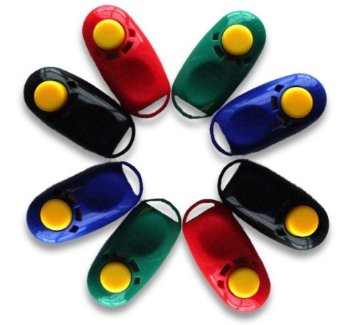
What is the point? With TAGteach™, a revolutionary new way of teaching, it’s a tag point. The tag point is the specific learning goal that the teacher will mark with a tag that highlights success for the learner. The tag pinpoints the exact moment the tag point is executed correctly and gives immediate and clear feedback to the learner or athlete. The most common and effective way to mark a correct response is with a short sharp sound made using a handheld clicker or tagger.

The tag becomes a positive reinforcer through association with tangible rewards (candy for example) or as a result of the good feelings that are come from success and improvement and praise from the teacher. Younger learners keep track of their tags and trade them in for beads, stickers or other prizes. Older and higher level learners often do not require a tangible primary reinforcer, since they are reinforced just by receiving the immediate and clear feedback from the tag. TAGteach is a targeted organized approach to giving positive reinforcement that facilitates accelerated learning while minimizing frustration on the part of teacher and learner.

Clarity and simplicity are key aspects of TAGteach. A tag point is defined so that the learner does not need to ask why he didn’t get a tag if the tag does not come. Tag points are never combined, since this can cause confusion, frustration and sometimes outright hostility in the learner. If a soccer player is asked to kick with the side of his foot, while looking at the target and holding his arms out for balance and the tag does not come, he will ask the coach which part he didn’t get correct. The coach will be forced to answer and this leads to verbal correction and defeats the purpose of using the TAGteach method. The TAGteacher thinks ahead, plans the succession of tag points that will be required to shape the skill and works on them one at time. As the learner becomes proficient with each piece, the entire skill naturally comes together. Sometimes a learner regresses. In this case the teacher moves back a step in the shaping plan and works back up again. Each time the learner improves more quickly than in the previous session. If a learner is having trouble, the teacher breaks the difficult aspect into even smaller increments so that the learner can succeed and earn a tag. TAGteachers learn to set their learners up for success so that learning becomes a very positive experience for both teacher and learner, with success leading to further success.

The immediacy and clarity of the feedback allows the learner to form a mental picture of the movement or position in association with the tag sound. “I can see a picture of myself doing it in my head”, said a ballet student when asked to explain why TAGteach helped to fix a problem with which he had been struggling for years. This “mental picture” description is frequently articulated by learners when asked what happens in their minds when they hear the tag. Some scientists think that the click sound is processed by the amygdala, a primitive part of the brain that controls emotion and fight or flight responses. This bypasses the complex processing of speech and allows for immediate processing and action. This may explain the rapid acquisition of skills and excellent retention rates that occur in high level competitive gymnasts taught with TAGteach.

TAGteach has been used in many disciplines, including business skills, music instruction, language instruction, sport coaching, speech pathology, physio and occupational therapy, medical student training, academic classroom, special needs classroom and more. “Tagging has taught my learners to think for themselves”, said kindergarten teacher Amy Roberts. “We saw an almost immediate improvement in skill execution and confidence in our Special Olympics rhythmic gymnasts”, said Debbie Boycott, head coach of the Oakville Butterflies from Oakville, ON Canada. “The athletes were very quick to understand and appreciate this way of teaching and were even able to teach each other using the TAGteach method”.

This teaching each other is called peer tagging, and is one of the most powerful aspects of TAGteach. Learners learn to tag each other and in so doing become caring teachers and keen observers. These learners learn twice, once by doing and receiving feedback from the tagger and once by watching and marking the correct performance of their peer. Peer tagging allows the teacher to focus on individual pairs while everyone is working. All learners receive positive reinforcement, even the “shadow child” who often gets little recognition in a traditional teaching environment because she does not cause trouble, but neither is she a rising star.

TAGteach is good for learners and teachers and it is also good for business. "Designing a safe system like this means breaking down each task into its individual components,” says Amy Duz, a corporate trainer who specializes in the fishing industry. “The process forces you to observe what goes on at every step and since everybody participates in the process, breaking something down becomes something everyone knows how to do. It's not just a job for management or the trainer, it’s everyone's job. This lends itself to more cooperation and consistency”.

Monday, December 6, 2010

Interview with TAGteach Co-founder Theresa McKeon

Listen to an interview with Theresa McKeon published at the blog of BehaviorTherapist.com:

In this episode, R. Trent Codd, III, Ed.S. LPC interviews Theresa McKeon about TAGteaching.  Items discussed include:
  • An overview of TAGteaching
  • The range of applications for this technology
  • The research base
  • The relationship between TAGteaching and Precision Teaching
  • Current directions in TAGteaching
Click here to go to the BehaviorTherapist blog and listen to the interview

Monday, February 16, 2009

Introducing TAGteach to fishermen Part 5

“The true test of a teaching methodology is its success across a spectrum.”

The first sentence of the first slide of the first TAGteach day said it all. TAGteach is a methodology that works...regardless.
I wanted to let the guys from the Seafisher know that although many of the examples and stories in the presentation were about TAGteaching gymnasts, golfers, kids with autism, and medical students, the methodology was universal and would certainly apply to them as well. Their minds should be set on “how this applies to me in my world”.

We continued with history and basic TAGteach information.
What is TAGteach?
What does TAG stand for?
What is a marker and why should you use it?
What are the benefits?

We let the guys practice tagging people on videos. This step is great to bridge the gap between clicking chickens and tagging people. It is a different feel and using the videos builds confidence and precision.
The group tagged examples like:
Using the inside of the foot in a soccer kick
Bent knees during a volleyball set
Straight legs in a handstand on balance beam

The seminar continued, loaded with games and practicals that provided on opportunity to experience teaching and learning with a focus on creating clarity. We talked about how to break down tasks into small crystal clear behaviors that could be tagged; tag points. The group had an “aha!” moment when they realized the added value that comes with tagging; competency assessment

Incorporating tagging and tag points provides the management or teacher a real time assessment of skill acquisition. An audible tag means “yes” success. No tag means “self assess and try again”. This method delivers as much information to the teacher or person tagging as it does the learner.

We often teach and then say “do you understand”.
The learner shakes their head “yes” because they don’t want to get in trouble, or do it again, or look foolish or whatever.
I have found that it is the rarest of times that the “yes, I understand” head toss is true to its implication.
This miscommunication between parties is the fuse that can torch a teacher/student relationship.
The teacher assumes the learner understands and moves on, expecting the behavior will be performed precisely as it was taught. The learner fears the impending failure.

Tag points provide clear incremental staging sites for success and assessment.
The tag point is given, “fish head facing in” (this was a real tag point for the guys lining fish up for efficient processing).
The tag is heard, the learner is reinforced by the sound of success (the tag).
If a tag is not heard then the learner looks at the position of the fish, mental replays the verbal tag point “fish head facing in”, corrects the position of the fish and receives reinforcement with the sound of the tag.
If the leader sees that the learner does not know why he didn’t receive the tag and cannot make the correction within a particular time frame, then the tag point can be taught again.
The leader is immediately made aware that for whatever reason, the information was not initially processed by the learner.

This particular benefit of tagging was meaningful to the group. A crew member not doing his job correctly can cause a myriad of problems: loss of production due to improperly cut, laid or packaged fish and of course any range of injuries from improper operations on the ship.

Next Chapter: Tagging the Roulette Table