
Reprinted with permission from Tedsword Blog
Neuroscientist David Eagleman’s Incognito mentions two fascinating stories of unexpected learning. Both attest to the mysterious powers of the human brain—and encourage a radical reexamination of how we teach and train.

Boys or girls?
…..
Photo courtesy of bsmalley at commons.wikipedia.org
…..
Photo courtesy of bsmalley at commons.wikipedia.org
Eagleman explains how many in the poultry industry of the 1930’s turned to the Japanese for a technique for training chicken sexers, workers who sort one-day-old hatchlings based on the sex of the bird. An untrained eye can’t tell the difference between a male and female chick; their bodies are just too similar. Trained masters could sort the birds effectively, even though they could not describe what they details they used for their decisions. As Eagleman writes, the selection “was somehow based on very subtle visual cues, but the professional sexers could not report what those cues were.”[1] They just knew, and they knew in a moment’s time.
The training for newcomers didn’t derail in a bog of mystery, however. Instead, masters stood over the apprentices and simply watched. As students examined each hatchling and made their choice—male or female?—the master offered feedback with a simple yes or no. After a few weeks of working this way, the student’s brain learned to distinguish what remained imperceptible to the conscious mind. The learner became a master and could now do the job with reliable and near-instantaneous accuracy. Amazing.
Around the same time period, Eagleman relays, British military advisers were trying to take advantage of a super-valuable skill enjoyed by several airplane hobbyists: being able to identify incoming aircraft quickly and accurately. (You don’t want to shoot down your own pilots returning home and you don’t want to give open air to German bombers.) Trouble was, as with the chicken sexers, the enthusiasts couldn’t articulate how they did what they did. In fact, when they tried to explain, they had even less success.
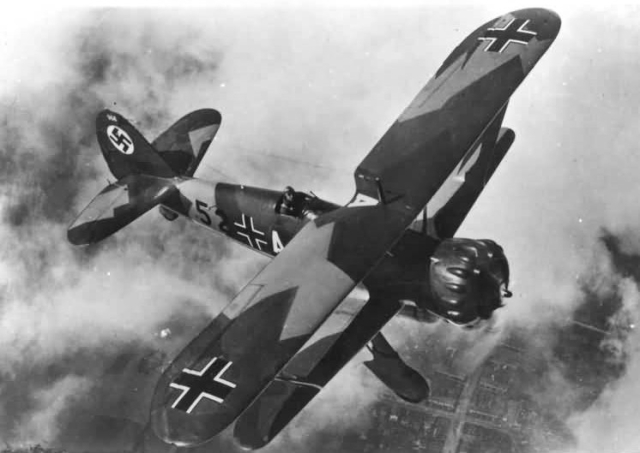
Sure it’s German, but would you know that from a distance?
Fortunately for the Allies, the British stumbled on a training technique parallel to that of the Japanese: trial-and-error feedback. A novice would work in partnership with an expert, getting a ‘yes’ or ‘no’ based on the accuracy of each guess. Over time, the students could identify the planes as successfully as their trainers could. They didn’t know how they had become experts specifically, but they knew that they could now safely do the job.
When I first heard these two stories, I was blown away (yet again) by the power of the unconscious mind. Many tasks—including such highly-refined, subtly-defined jobs as these—simply don’t need words or explanations for us to ‘get’ them. In fact, the words can actually obstruct the learning. We don’t even need to be able to identify just what it is we’re getting. We only need clear, well-timed neutral feedback—sight, sound, touch—that indicates whether or not we’ve done it right. With enough repetitions, our below-the-surface brain narrows in on the ‘right’ answer. Over time, we come to predictably produce the desired result. We get knowledge even if we lack detailed awareness. We can guess the chicken’s sex. We know which plane is friend and which is foe.
Even if we’re working on skills we can articulate, these simple but surprising stories present a radical challenge to the ways we usually teach. I, for one, love explaining things. An aspiring poet of precision, I hope that my words can bring light to darkness and clarity from confusion. Given enough time—or even on the fly—I’ll look for the cleanest, clearest, most concise way to describe what’s needed. Ideally, I’m a master craftsman drawing from a broad and deep instructional toolkit, one I’ve spent years developing. I know I’m not alone among teachers. We like sharing the secrets of our subject. The words justify the investments we’ve made. But these stories suggest the self-importance might get in the way. That’s all well and good, they interject. You can have all the verbal fluency you want. It just may not be necessary for good teaching.
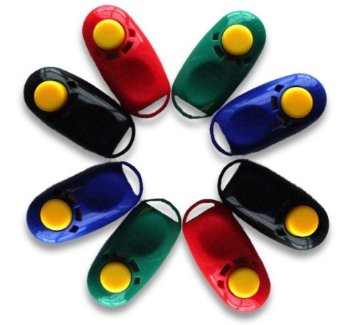
Behavior accomplished? A circle of clicks.
I don’t have enough information from Eagleman’s stories to know for sure how the chicken sexer and plane spotter trainers signaled ‘Yes’ and ‘No’ to their learners. Maybe they simply spoke the words. Or perhaps they punished wrong answers with a slap of the wrist. Whichever method they used, the positive reinforcement method of TAGteaching seems an elegant refinement. [2] In TAGteach, we don’t need to hear the ‘no,’ see a red light, or feel any sort of shocking buzzer. We just need to know when we’ve done it right. Click. Green light. Instant tap. Without that affirmative reinforcement, the learner knows he needs to adjust and does so—on his own—until hearing the click. No words, vocal instructions, or social dynamics muddy the instructional waters. The student—or at least his unconscious brain—sorts it out and waits for the simple, neutral message: ‘yes, that’s it’ or ‘keep trying.’
Note well that, though words don’t matter nearly as much, the teacher still does. For one, she needs to know and be able to spot the correct behavior as it’s happening. If the target behavior can be broken into smaller chunks, she needs to choose which steps will lead most fluidly to the desired ability: too easy and learners get bored, too demanding and they’ll get frustrated. And she needs to mark the behavior with exquisite accuracy, capturing the ‘yes’—even anticipating it— in real time so the reinforcement holds with maximum depth and duration. Not everyone has the patience for such painstaking precision. Not everyone has the emotional savvy to maintain an even keel throughout the struggles and successes along the way. Not everyone has the flexibility to adapt on the fly when a learner keeps getting stuck. You still need skill to teach well.

An amazing learner, even without words.
Let me declare, then, that I intend to develop such precision, neutrality, and flexibility in myself. Like almost everyone else I know, I’m still struggling to dismantle the well-calcified model that suggests teachers and coaches dispense information like soup from a pot or software from a server. Transmit. Bequeath. Download. Building a new model will take some unlearning of the old and much steady practice at the new. Still, I’m committed. Like the chicken-sexers and plane-spotters of old, I can rely on the sub-verbal intelligence of my learners. I can trust the brain’s ability to integrate indescribably complex information. Pedagogical elegance through experiential design rather than through wordy exposition? Yes.
[1] This quotation and the chicken sexer and plane spotter stories come from David Eagleman’s Incognito, Vintage Books: New York, 2011, pp. 57-58.
[2] In TAGteaching, the learner and instructor determine a desired behavior or ability. We may be able to articulate with words the elements that compose the skill or we may not, like with the chicken sexers and plane spotters. It doesn’t matter so much. What does matter is breaking the behavior down into achievable steps and working through those steps one at a time, using consistent, neutral markers to communicate the moment the task has been performed correctly. For example, a powerful and efficient softball throw includes multiple micro-components, each of which could become a TAG point: proper grip on the ball; a cock-and-flip motion of the wrist; correct position of the glove hand and throwing elbow in the ready position; weight shift of the feet; and so on. The smaller the task, the greater the likelihood of success in learning it quickly.
With this method, the ‘yes’ feedback can come through visual or tactile channels—via a flashing light or a precise press against the skin, for example. That said, most TAGteachers use a distinctive sound like a snap or a click, and that’s where the method’s name comes from: you create a “TAG” by Teaching with Acoustical Guidance.


