Tuesday, December 17, 2013

TAGteacher Tale: I Cried Like a Baby for an Hour


By Kelly Drifmeyer

My name is Kelly Drifmeyer, I’m a classical musician on the Horn (French Horn), and a college professor at the Crane School of Music, SUNY-Potsdam. I’ve also trained and enjoyed the company of golden retrievers for 24 years.

I first woke up to the idea that I could learn and teach in a different way about 23 years ago. My early learning experiences as a hornist were with artist-musicians I think of as “old school” teachers. They learned how to teach from their teachers, and they from theirs, back to the European masters of the instrument back to who-knows-when. What they all had in common was a thick language of instruction on “how” to do things, and a negative and often punitive style of correction when you didn’t do those things right. There was one right way – their way – and to not follow instructions to the letter, or not provide the ideal result, was an invitation to a browbeating, embarrassment, or demeaning and sometimes harsh verbal correction. “You’ll never be successful sounding like that…that’s not good enough…you better find a different career,” these were all commonplace comments in both my own experience and the experiences of my fellow students. None of us liked it, but it became a badge of honor to survive lessons under those conditions and not break down.

When I started my own music teaching, it was about the time I also began formal dog training. In the early ‘90’s in my area this consisted of the “jerk and release” methods of instruction and correction. You said “good girl” in an anemic sort of way if they did it right, and yanked them around on the end of a leash when they didn’t. My first, sensitive golden began to avoid me on training nights, and at home she would startle and cower at the slightest raising of my voice – whether it was meant for her or not. We stopped training, how could I keep abusing my sweet girl like that? I finally went hunting at the bookstore for something different (this was pre-Google!) and stumbled upon “Don’t Shoot the Dog!” by Karen Pryor. I read it, and re-read it, and felt immediately guilty for being so stupid when there was such an obvious alternative. A “clicker” wasn’t easy to come by, but I found one eventually and off we went into dog training happiness.

It was quite a while later when I connected the dots to myself, and to my horn students. My early training (and being a perfectionist) had left me with a pile of mental self-abuse chatter that turned “on” every time I picked up the horn. I couldn’t practice, rehearse, or perform without a stream of negative thoughts flowing through my head. I almost quit the profession twice. I struggled with auditions, the one and only way to get a job in the performance field. I played beautifully at times, and had meltdowns at others. Nothing was ever “good enough”, so the angry commentary never stopped. Worst of all, I saw the same attitudes and negativity in my own students.

Tagteach isn’t where I started, but it is where I ended up. I tried the Artist’s Way, the Inner Game books, Peak Performance ideas, even “positive speaking” models, nothing solved the problem completely - until I picked up my dog clicker and used it on myself. I gave myself one task, used positive-only feedback, and ignored the bad stuff because it didn’t matter. The first time I tried it, I cried like a baby for an hour. And then went back and did it again.

I used this method for several years on my students and on myself before I discovered TAGteach in 2010. Another revelation – I wasn’t secretly doing something bad by using my dog training skills on my students, other people were doing it too! I read every inch of the website, watched every video I could find, took the online class and wanted more. In Spring 2011 I went to my first workshop with Theresa McKeon and it was amazing! I didn’t have the easiest time there – I had been using a self-taught method with a more relaxed structure, and I struggled with the new format and new terminology. But with practice has come an understanding of how the language of TAGteach helps me define my own thoughts, and helps my students with their own frame of reference.

I now use tagging regularly for specific tasks with all of my students. They universally respond in a very positive way, and many of them will ask for a tagging session when they find they’re struggling with a particular activity. I don’t use it every lesson, or for everything, but its an invaluable tool when working on high stress or high frustration problems. I find it to be especially effective when working on more physical issues. Musicians frequently work with muscles on a micro level – tiny, flexible motions of tiny, fragile muscle groups. Stress and tension can ruin the ability to use these muscles correctly, and I’ve found tagging lowers frustration, which lowers tension, which creates a calmer, more relaxed learner. And like magic, the relaxed learner is a successful doer.

The “magic” of TAGteach was brought home to me just a few weeks ago. I have a new student, “Amy”, who is bright, hard working and dedicated. She is also a mental and physical mess – tight, twisted posture, loads of tension, and a low threshold for frustration. She gets upset at the smallest things, and I sometimes walk on eggshells trying to get her to correct a problem without having a full-on meltdown. I’ll be honest – Amy was not my favorite student. I was irritated by her touchiness, and I’d lost patience with her meekness and sensitivity. It was no surprise that in a recent lesson, I found myself correcting, and correcting again a singular problem she could not seem to manage. I was getting frustrated, my voice was getting louder - when I noticed her hunching lower and lower in her chair, getting smaller and tighter at every attempt. Just like my sweet, sensitive golden almost 20 years ago.

Stop, I said to both of us. I took a deep breath and picked up my tagger. “This is a tagger. When you hear this sound - *click* - you’ll know you’ve done it right. If you don’t hear the sound, just try it again, no problem.” That’s all I told her the first time out. I took her through a focus funnel – explained what we were doing, then defined a single task, then gave her a single tag point – and off we went. And I felt stupid all over again for not having done it weeks earlier – she was finding success within ten minutes. And more importantly, she was then able to successfully integrate the new skill into a larger, more complex format. She also remembered, and repeated, the newly won skill for me the next week, and the next.

What’s most interesting to me about this story? I like Amy more now than I used to. We’ve found a way to communicate that takes some of the friction out of our relationship. She learns more confidently, and I’m also more relaxed, knowing I can say what I need to without hurting her.

TAGteach is an elegant, simple, precise language I use to interact with myself and with others. It’s a gateway to learning and teaching that bypasses the traditional use of negative feedback that so often produces frustration, stress, anger, and resentment. The teaching of musicians is shrouded in those traditions passed on through generations. That seems great to me in “what” we learn, but “how” we learn it needs some help. TAGteach resolves so many of the barriers to effective learning and retention, I’m spending a semester on sabbatical in 2014 to improve my own understanding of TAGteach and show others in my field how useful it can be.

Kelly Drifmeyer
Associate Professor of Horn
The Crane School of Music SUNY-Potsdam
Potsdam, NY 13676
drifmekb@potsdam.edu


Wednesday, December 4, 2013

TAGteacher Tale: A Winning Approach to Transforming Your Instructor


TAGteacher Joey Iverson has successfully introduced TAGteach to the tennis world, although she said it’s for selfish reasons. “I want to be the best tennis player I can be and that will happen faster if my coach uses TAGteach!”

"I explained a few of the tools to my coach Grant Grinnell (USPTA) and he was willing to give it a shot. After just a few tries, he was totally sold on the value of TAGteach and the powerful learning it facilitates. He commented that there was more improved play in my game within a single lesson. He also noticed that although it was easier to get information to me with the marker, it also required a different focus. In a group lesson he is usually trying to take in what each of the players is doing. To tag me for the skill, he had to momentarily keep his focus on just me or he would miss the marker timing. Both of us had complete focus and that brought about immediate improvement."

It seems Joey’s coach is as excited about TAGteach as she is:

“I love everything about what you've taught me. I love the tag, I love the positive reinforcement. I love no negative connotation. I love the focus of what I need to do and I love the focus of what students can do if they are tagging somebody else. I love everything about it, it's fantastic and I plan on using extensively in my teaching in the future.”

The word is spreading fast. After watching a TAGteach session between Grant and Joey, another coach, Chad Smith USPTA wanted in. It wasn’t long until he found exactly why TAGteach worked for him.

“TAGteach worked for me because I could mark the exact point I need my students to feel in my lessons. My students quickly associated the tag with what I was trying to get them to understand in their technique. It made my instructions that much more effective.”

Thank-you Joey for spreading the word effectively and kudos to Grant and Chad for being coaches that are open to new concepts that improve learning for their students!

USPTA Tennis Coach Grant Grinnell Talks About TAGteach


Join us for a webinar with TAGteacher Joey Iversen on May 20, 2014 where we will learn about strategies for helping to transform your instructors, teachers or coaches so that they can begin to teach the way YOU want to learn. Click here for more information or to register.

BONUS! Register for this webinar and you will get a discount code for 25% off our recorded webinar: Sport Coaches: 4 Thing Your Athletes Wish You Knew. This webinar covers specific details of TAGteach for Sport Coaches.

DOUBLE BONUS! Register for the Sport Coaches webinar recording and you will get a free pass for your coach or instructor.

Saturday, November 30, 2013

What Do a Sea Hare and Stephen Hawking Have in Common?

We are often asked why it is that TAGteach works so well and so fast, sometimes yielding behavior change or learning that seems magical. There is no magic involved, except that which goes on in our brains. Level 3 TAGteacher Luca Canever presented a fascinating webinar about how the brain learns and why TAGteach works so well.

By Luca Canever

I am pleased to have this chance to share my passion about the brain and how it learns, with my fellow TAGteachers. Here is a brief outline of the topics I will cover in my webinar:

Working Memory and Cognitive Load


The TAGteach mantra "talk less, teach more", seems counter-intuitive, but there is sound science behind this. In this part I want to discuss how working memory works in the brain. The role of this specific memory is to catch things from environment to ensure our survival. We can think of the working memory like a window from which our consciousness looks at the world. Also the working memory creates the memories for the long term memory. If we overload the working memory with too nmuch information it won't be able to pass on the memories, and the learning will stop. Too much information it's not good for the learning. TAGteach, indeed is.

Associative Learning: What a Sea Hare and Stephen Hawking Have in Common


Earth had 3 billion years of bacteria, before life discovered associative learning. Life had blossomed about 540 million years ago when the first multicellular organisms discovered associative learning. If you know (and you can remember) where you can find food, mating opportunities and where your predator is waiting for you, your survival chances will increase. Organisms have learned by association for millions of years, so the argument that TAGteachers sometimes hear from parents: "Don't treat my daughter like a dog!" makes no sense. From the lowly sea hare to the brilliant Steven Hawking, we all learn in the same way. What is different is the complexity in the brain. But I'll give references to recent findings that indicate our (human) brains are not brand new. On the contrary they use pieces and parts that already exist and adapt them to our new requirements.

Maps in the Brain - Why My Car is not Like Yours


In his book "Thinking fast and slow", Daniel Kahneman says that each of us has his/her own, clear idea of what a car is. But if you ask two people to draw a car what you get is two different things. At the same time we can understand each other because we "share" the idea of "car" or "table". We can develop a common language because my representations in my brain are similar to yours. The memories in the brain are not "single-folder" kind. Memories are maps in the brain with different pattern for everyone. TAGteach helps because with the WOOF rules creates a crystal clear tag point that is clearly understood by both teacher and learner.

Click here for more information or to register for the webinar recording


Monday, November 25, 2013

Theresa's TAGteacher Gift List

Looking for the perfect gift for a TAGteacher? Or to put on your own Christmas list? We've put together a list of Theresa's recommended reading for TAGteachers. Just forward this link to Santa and try to be very, very good!

Click on any book to get more info or to buy it from Amazon.


Saturday, November 23, 2013

Upcoming TAGteach Seminars


Holiday Special! 10% off all 4 upcoming US seminars, until Dec 25, 2014

TAGteach Webinar: How the Brain Learns (Why TAGteach Works so Well)
Date: Jan 30, 2014
Location: Online
Get more info and register
TAGteach Primary Certification and Training Seminar
Date: Feb 8-9, 2014
Location: Tampa FL (Busch Gardens)
Get more info and register
TAGteach Primary Certification and Training Seminar
Date: Feb 22-23, 2014
Location: Marysville (Central OH)
Get more info and register

TAGteach Primary Certification and Training Seminar
Date: Mar 8-9, 2014
Location: Denver CO
Get more info and register

TAGteach Primary Certification and Training Seminar
Date: Apr 5-6, 2014
Location: Seattle WA
Get more info and register 

TAGteach Primary Certification and Training Seminar
Date: Jun 14-15, 2014
Location: Valencia, Spain
Get more info and register


Wednesday, November 20, 2013

Explaining TAGteach to Your Sports Parents

If you are a coach using TAGteach and you want to explain what you are doing to the parents of your athletes - we have just the thing! You can download these cool pamphlets created by Michelle Ma and Maya Rankupalli. One is generic and one is specifically for skating. These are PDF files. If you want to add your own contact information you can do this by importing the file into Adobe Photo Shop or similar program and making changes. We are unable to help with this.

Click here to get the generic pamphlet page 1

Click here to get the generic pamphlet page 2

Click here to get the skating pamphlet

Not only are these available in print, but TAGteach is also explained in ASL in this wonderful video created by ASL interpreter Bonnie Gibson-Brydon and her beautiful assistants Sissy and Nicole Paniagua.

Thanks to Lynn Loar, Libby Colman and Judy Johns for mentoring and facilitating the production of these materials. Produced by The Pryor Foundation.


Tags on Ice


For more about TAGteach with skating, purchase the Tags On Ice DVD produced by TAGteacher and skating coach Lynn Loar. Here is a video trailer:


More About TAGteach and Sports


TAGteach works incredibly well for sports training. Check out the sports page at our website for more information and our recorded webinars with sports-related content

    
                            Back chaining                  Equestrian Instruction                     Sport Coaching                                                              

Sunday, November 17, 2013

Autism: Turning Liabilities into Assets with TAGteach

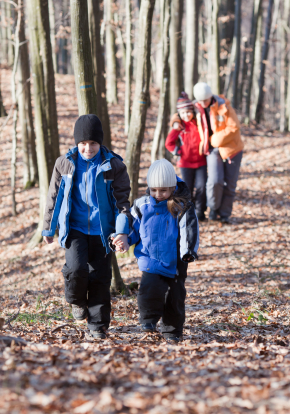
Family walking in the woods
By Martha Gabler

Hello. My name is Martha Gabler and I am the parent of a nonverbal teenage boy with autism. I would like to invite you to learn about a teaching approach known as “Teaching with Acoustical Guidance” (TAGteach), and how it turned the “liabilities” of autism into “assets” in our house. I will also give an example of how I used TAGteach to teach my son two useful behaviors that greatly improved our quality of life. I hope you will want to learn more, and if you do, I invite you to contact me with any questions.

The liabilities

If you ask, “Why is it so hard to teach a child with autism?” you will get a long list of “liabilities.” These include sensory issues, speech and language difficulties, and challenging behaviors, many of which are severe. Recent research at the University of Rochester shows how just a few of these problems can create confusion for a learner with autism. Research at the University of Rochester has demonstrated that children with autism perceive movement as occurring faster than it actually is. So, if you demonstrate something with objects or your hands, the child will perceive the movements as happening faster than they actually are. Combine this perception problem with research from SFARI which demonstrated that children with autism take longer to listen to and process speech. Now, imagine the confusion for the child: objects, people’s movements and activities are moving too fast, but language comprehension is going too slowly: everything is out of snyc. No wonder the child has a hard time with learning and becomes frustrated. These negative emotions can lead to anger, acting out and all those challenging, sometimes aggressive behaviors we hear about.

How does TAGteach change these liabilities into assets?

TAGteach changes all of this by starting the teaching process with only the behavior the child is already doing. TAGteach is based on the same scientific principles as Applied Behavior Analysis (ABA) and uses positive reinforcement to increase desired behaviors. What TAGteach adds—and this is the unique part--is an acoustical signal, a sound such as a tap, click or ping. The purpose of the acoustical signal is to “mark” a behavior that the child performs, at the exact moment the child performs the behavior. With TAGteach, the acoustical mark is called a tag. Demonstrations and long-winded explanations are replaced by a neutral sound that gives the child precise information that he has done something right. It’s a two-step procedure: tag the behavior when the child performs it, then hand over a treat or desired item (the reinforcer). The child gets precise information and a reinfocer. You can see how this would be pleasant for the child, and we all know that a behavior that is reinforced is a behavior that will occur more often.

A real life example

Here is how I used TAGteach (tags and positive reinforcement) to teach my son good car behavior. When my son was little he had difficult behaviors in the car: lots of ear-splitting shrieking and kicking the front seat. These behaviors interfered with my ability to watch traffic and drive safely. I could not explain to him that these behaviors were dangerous, nor could he control the behaviors. I desperately wanted him to be quiet and still in the car so we wouldn’t have an accident. After thinking about it, I decided that the two behaviors I wanted in the car were “Quiet Mouth” and “Feet Still.” We practiced with my husband driving and me tagging, every time my son had a split second of “Quiet Mouth” or “Feet Still,” I tagged the behavior by clicking with a little plastic box clicker and immediately giving him a little treat (the reinforcer). He learned fairly rapidly to lower his voice and keep his feet down. He has good car behavior now, so the whole family can get out and go places with no anxiety; even 7-8 hour trips are no problem.

With TAGteach I was able to change his behaviors from dangerous to safe. There was no punishment. There was no coercion. He liked it because he experienced positive reinforcement in the form of praise and candy. Plus, we ended up taking more car trips and going to interesting places, which he enjoys. At the beginning he could not connect the car trip with getting to go to somewhere fun and interesting. It was essential to have reinforcement along the way, until he began to realize that the car meant good things to come.

TAGteach blasts through the liabilities

TAGteach works so well because the sound (the click or ping) tells a child, “You did something right, now you are getting a treat.” The click indicates success to the child, and success is great! We all like success and kids with autism generally experience very little success. Despite the sensory issues and the language processing issues, the click rings loud and clear and tells the child that he did something right. Once the child realizes that his own behaviors result in helpful information and reinforcement, i.e., success, he looks for more opportunities to get more of these good things. From that point on, it is just a matter of observing the child, noting which behaviors are helpful or positive, then tagging and reinforcing those behaviors. When a child is successfully learning functional behaviors and is able to participate in more pleasant activities, his horizons expand and the difficult, angry behaviors decline.

The assets

TAGteach opened my eyes to other features of my child. I observed that he is extraordinarily attuned to positive reinforcement. He uses his sensory skills (as I call them now) to perceive what actions are bringing reinforcement to him, and he is very focused on what is happening in his environment. Please note that now I describe him in terms of being “attuned,” “perceiving” and “focused”, as opposed to sensorily challenged. He uses his remarkable sensory and perceptive abilities to figure out what he is doing that is right, and thus learns lots of great new behaviors. Plus, he is always proud of himself when he has mastered a new skill.

My son has learned to use his exceptional sensory abilities to tune in to and capitalize on positive reinforcement in his environment, in particular, the sound of the tag. Because anyone can observe his behavior and tag him to tell him he is on the right track, he can go places without me and learn new cooperative behaviors. For example, this summer he went to sleep away camp for a week and camp staff were able to keep him calm and happy by telling him with the tagger what was expected of him in this new environment. It is a huge relief to me to know that he can be content away from me and that the TAGteach approach I have used with him is transferable to others.

My son’s name is Douglas; his nicknames are “Doug” and, inevitably, “Doug-bug,” “Love bug,” “Hug-a-bug” and “Bug-alicious.” These nicknames raised up an image in my mind of a child with autism as having powerful sensory “antennae” that are sweeping about looking for positive reinforcement. Once the antennae “lock on” to the positive reinforcement trail, they will continue to follow it. All we have to do is provide the bread crumbs, cookie crumbs or treats at frequent, strategic intervals to lead him to the desired destination: functional skills, learning, and opportunities to go places.

You catch more flies with honey than vinegar.

This is how TAGteach turns LIABILITIES into ASSETS.

About Martha

3D_Book_Image_no Background

Martha Gabler is the mother of a non-verbal teenager with severe autism. Martha lives in Silver Spring, Maryland with her husband and two sons. Her older son is at university pursuing a degree in mathematics. Martha runs a tutoring company called Kids' Learning Workshop LLC, and is the author of the book entitled Chaos to Calm: Discovering Solutions to the Everyday Problems of Living with Autism. Martha writes articles to help other autism parents solve or prevent behavior problems at her blog: www.AutismChaosToCalm.com. Martha loves to hear from readers and to answer questions at her Facebook page.