Monday, December 17, 2012

Upcoming Events


TAGteach at Clicker Expo - San Francisco
Date: Jan 25-27, 2013
Location: Burlingame, CA
Get more info and register 

TAGteach Primary Certification and Training Seminar
Date: Feb 9-10, 2013
Location: Marysville, OH
Get more info and register

Webinar: Using TAGteach to Reduce Fear (50% off for members)
Date: Feb 12, 2013
Location: Online
Get more info and register

WOOF: The Eastern European Training and Behaviour Conference
Date: Feb 22-24, 2013
Location: Milton Keynes, UK
Get more info and register

TAGteach at Clicker Expo - Stamford CT
Date: Mar 8-10, 2013
Location: Burlingame, CA
Get more info and register  

Webinar: Leave It! Impulse Control for Teachers (Free for members)
Date: Mar 13, 2013
Location: Online
Get more info and register

Webinar: Information Overload - How to Say More but Talk Less (50% off for members)
Date: May 13, 2013
Location: Online
Get more info and register

TAGteach Primary Certification and Training Seminar
Date: Jun 8-9, 2013
Location: Dripping Springs, TX
Get more info and register

TAGteach Primary Certification and Training Seminar
Date: Sep 7-8, 2013
Location: Bristol, England
Get more info and register

TAGteach and Chicken Camp
Date: Sep 12-15, 2013
Location: Northern Italy (location TBA)
Get more info and register

TAGteach Primary Certification and Training Seminar/Séminaire TAGteach de base avec certificat (en français)
Date: Sep 21-22, 2013
Location: Crêt-Bérard-Puidoux, Switzerland (Near Geneva)
Get more info and register


Friday, December 7, 2012

The Three Try (or Less) Rule - How to Create Success


Learners can become frustrated and lose focus when they fail, especially if they are adult students.
This is why we suggest, the three try (or less) rule.  If a learner fails three times to meet the tag point criterion, go to a past point of success and move forward in smaller increments. In this manner you can build on success instead of searching blindly for a potential point of success. Of course the 'three try rule' isn't really a rule. The learner never has to fail three times. If it is clear the learner will not likely achieve the tag point criterion after the first failure, jump right in and clarify or change the tag point.

The best designed tag points move the learner forward but don't ask them to teeter on failure.
Some people have remarked after watching a TAGteach session or seeing some of our videos "they got a tag every time, don't they need to make mistakes to learn?" The answer is, no they don't need to make mistakes to learn. A TAGteacher will always try to set the learner up to succeed and never purposely make things too difficult. The whole point of using TAGteach is to create clear communication, encourage focus and build a desire to succeed. When the fear of failure is reduced, the learner can focus on the task at hand. Skill acquisition is accomplished quickly and without an undue amount of stress.

Watch this video of the three try rule in action. The learner makes three mistakes in a row. Instead of asking him to try again and risk frustration (and a full-on meltdown) the teacher goes back to a previous tag point and starts to build up again from there.

Wednesday, December 5, 2012

Mein Hund zerrt! My Dog pulls!

By Bina Lunzer


I had an extremely cool TAG session yesterday night. It was about teaching my loose leash protocol to handlers who started in a beginners' course today. I had doubts if I should do a TAG hour at all - I had one elderly lady, one person with severe health issues (spine problems, had several surgeries), some "serious" people in academics (e.g. PhD in Pharmacy) etc. --- and I could not imagine them playing "the dog". :-D In the end I gave it a try and it was a blast! 1.5 hours of laughing almost nonstop for all attendees - and they learnt SO MUCH. They said things like: "Bina, I did not realize that I pop the leash automatically every time I stop! This is awful, I am happy to know now." So they had very important self-reflections without feeling embarrassed - really wonderful. And the person with the spine problem was magically cured and even wanted to pretend to be the dog- four legged on the floor (which I do NOT ask from participants when playing "the dog"!!!!!), The elderly lady had to hold on to other people as she was laughing so hard she was afraid she would fall. We had a great time.

Today, the course started, and many said that they were happy to have the opportunity to hone their handling skills on humans and that they feel much safer now in the task with their dogs.

Great experience for me as a trainer.

The Tag Points

Bina has created several tag points to help teach students her loose leash walking approach. You will need to watch the videos to understand the process and the tag points. This teaching is done without the dogs present. Students work in pairs and take turns pretending to be the dog. Here are some of the tag  points:


The directions are: Before the click, hold hand still
          The tag point is: hand still 
 The directions are: After making eye contact, walk ahead
           The tag point is: walk ahead 
 The directions are: If the dog crosses the toe boundary, turn 90 degrees
           The tag point is: turn 90 degrees 
 The directions are: While redirecting the dog,
           The tag point is: look at hand 
l

Purchase Bina's book (in German)

Mein Hund zerrt! Wie man einen Schlepplift im Wolfspelz in einen leinenführigen Hund verwandelt (Hilfe! Mein Hund...) [Kindle Edition]

Bina Lunzer Lili Chin 

Video in German


Video in English

Tuesday, December 4, 2012

How to Turn Criticism into Smiles

By Beth Wheeler


Our dancers receive adjudications at competition often in the form of audio files - so the girls literally listen to the judges comment about their dancing. Many judges are very positive but just as many are "critics" and some can be quite negative.

There's no way I have the time to listen and edit each tape from each judge for each dance at each competition. For years I just didn't have the kids listen -such a shame as we WANT the kids to get input from these other teachers. Once we began tagging we realized that translating negative language would be an important skill to learn and so here's what we do.

As we listen to the tapes, our dancers use tally marks or stickers to note each "good" or "yay" comment as a tag. In another column our dancers write the negative comments translating to tag points. If a judge says "pretty costume" = Tag! "nice smile" = Tag! "Your knee is bent in your leap" = tag point is... Stretch knee. "You shouldn't be looking at the floor" = tag point is... Look at the audience.

The dancers have gotten so quick and comfortable at translation that they do it subconsciously. So much so that it's not uncommon for them to smile if I get grumpy at them. When I slip and use a negative, they're smiling cuz they're hearing the tag point! Not an excuse to get grumpy of course - just really nice to know that where ever they are in the world, they're translating.

More about A Dancer's Dream

Wednesday, November 28, 2012

Chicken Sexers, Plane Spotters, and the Elegance of TAGteaching

By Ted Desmaisons
Reprinted with permission from Tedsword Blog


Neuroscientist David Eagleman’s Incognito mentions two fascinating stories of unexpected learning. Both attest to the mysterious powers of the human brain—and encourage a radical reexamination of how we teach and train.
Boys or girls?
…..
Photo courtesy of bsmalley at commons.wikipedia.org
Eagleman explains how many in the poultry industry of the 1930’s turned to the Japanese for a technique for training chicken sexers, workers who sort one-day-old hatchlings based on the sex of the bird. An untrained eye can’t tell the difference between a male and female chick; their bodies are just too similar. Trained masters could sort the birds effectively, even though they could not describe what they details they used for their decisions. As Eagleman writes, the selection “was somehow based on very subtle visual cues, but the professional sexers could not report what those cues were.”[1] They just knew, and they knew in a moment’s time.
The training for newcomers didn’t derail in a bog of mystery, however. Instead, masters stood over the apprentices and simply watched. As students examined each hatchling and made their choice—male or female?—the master offered feedback with a simple yes or no. After a few weeks of working this way, the student’s brain learned to distinguish what remained imperceptible to the conscious mind. The learner became a master and could now do the job with reliable and near-instantaneous accuracy. Amazing.
Around the same time period, Eagleman relays, British military advisers were trying to take advantage of a super-valuable skill enjoyed by several airplane hobbyists: being able to identify incoming aircraft quickly and accurately. (You don’t want to shoot down your own pilots returning home and you don’t want to give open air to German bombers.) Trouble was, as with the chicken sexers, the enthusiasts couldn’t articulate how they did what they did. In fact, when they tried to explain, they had even less success.
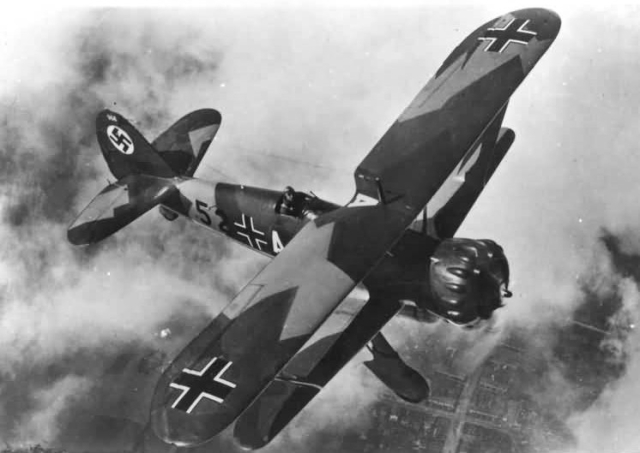
Sure it’s German, but would you know that from a distance?
Fortunately for the Allies, the British stumbled on a training technique parallel to that of the Japanese: trial-and-error feedback. A novice would work in partnership with an expert, getting a ‘yes’ or ‘no’ based on the accuracy of each guess. Over time, the students could identify the planes as successfully as their trainers could. They didn’t know how they had become experts specifically, but they knew that they could now safely do the job.
When I first heard these two stories, I was blown away (yet again) by the power of the unconscious mind. Many tasks—including such highly-refined, subtly-defined jobs as these—simply don’t need words or explanations for us to ‘get’ them. In fact, the words can actually obstruct the learning. We don’t even need to be able to identify just what it is we’re getting. We only need clear, well-timed neutral feedback—sight, sound, touch—that indicates whether or not we’ve done it right. With enough repetitions, our below-the-surface brain narrows in on the ‘right’ answer. Over time, we come to predictably produce the desired result. We get knowledge even if we lack detailed awareness. We can guess the chicken’s sex. We know which plane is friend and which is foe.
Even if we’re working on skills we can articulate, these simple but surprising stories present a radical challenge to the ways we usually teach. I, for one, love explaining things. An aspiring poet of precision, I hope that my words can bring light to darkness and clarity from confusion. Given enough time—or even on the fly—I’ll look for the cleanest, clearest, most concise way to describe what’s needed. Ideally, I’m a master craftsman drawing from a broad and deep instructional toolkit, one I’ve spent years developing. I know I’m not alone among teachers. We like sharing the secrets of our subject. The words justify the investments we’ve made. But these stories suggest the self-importance might get in the way. That’s all well and good, they interject. You can have all the verbal fluency you want. It just may not be necessary for good teaching.
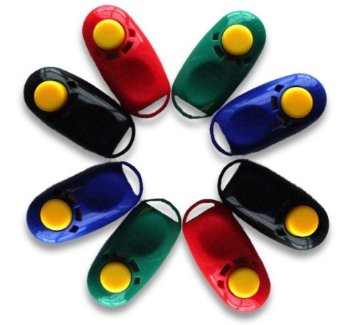
Behavior accomplished? A circle of clicks.
I don’t have enough information from Eagleman’s stories to know for sure how the chicken sexer and plane spotter trainers signaled ‘Yes’ and ‘No’ to their learners. Maybe they simply spoke the words. Or perhaps they punished wrong answers with a slap of the wrist. Whichever method they used, the positive reinforcement method of TAGteaching seems an elegant refinement. [2] In TAGteach, we don’t need to hear the ‘no,’ see a red light, or feel any sort of shocking buzzer. We just need to know when we’ve done it right. Click. Green light. Instant tap. Without that affirmative reinforcement, the learner knows he needs to adjust and does so—on his own—until hearing the click. No words, vocal instructions, or social dynamics muddy the instructional waters. The student—or at least his unconscious brain—sorts it out and waits for the simple, neutral message: ‘yes, that’s it’ or ‘keep trying.’
Note well that, though words don’t matter nearly as much, the teacher still does. For one, she needs to know and be able to spot the correct behavior as it’s happening. If the target behavior can be broken into smaller chunks, she needs to choose which steps will lead most fluidly to the desired ability: too easy and learners get bored, too demanding and they’ll get frustrated. And she needs to mark the behavior with exquisite accuracy, capturing the ‘yes’—even anticipating it— in real time so the reinforcement holds with maximum depth and duration. Not everyone has the patience for such painstaking precision. Not everyone has the emotional savvy to maintain an even keel throughout the struggles and successes along the way. Not everyone has the flexibility to adapt on the fly when a learner keeps getting stuck. You still need skill to teach well.
An amazing learner, even without words.
Let me declare, then, that I intend to develop such precision, neutrality, and flexibility in myself. Like almost everyone else I know, I’m still struggling to dismantle the well-calcified model that suggests teachers and coaches dispense information like soup from a pot or software from a server. Transmit. Bequeath. Download. Building a new model will take some unlearning of the old and much steady practice at the new. Still, I’m committed. Like the chicken-sexers and plane-spotters of old, I can rely on the sub-verbal intelligence of my learners. I can trust the brain’s ability to integrate indescribably complex information. Pedagogical elegance through experiential design rather than through wordy exposition? Yes.

[1] This quotation and the chicken sexer and plane spotter stories come from David Eagleman’s Incognito, Vintage Books: New York, 2011, pp. 57-58.
[2] In TAGteaching, the learner and instructor determine a desired behavior or ability. We may be able to articulate with words the elements that compose the skill or we may not, like with the chicken sexers and plane spotters. It doesn’t matter so much. What does matter is breaking the behavior down into achievable steps and working through those steps one at a time, using consistent, neutral markers to communicate the moment the task has been performed correctly. For example, a powerful and efficient softball throw includes multiple micro-components, each of which could become a TAG point: proper grip on the ball; a cock-and-flip motion of the wrist; correct position of the glove hand and throwing elbow in the ready position; weight shift of the feet; and so on. The smaller the task, the greater the likelihood of success in learning it quickly.
With this method, the ‘yes’ feedback can come through visual or tactile channels—via a flashing light or a precise press against the skin, for example. That said, most TAGteachers use a distinctive sound like a snap or a click, and that’s where the method’s name comes from: you create a “TAG” by Teaching with Acoustical Guidance.

Monday, November 19, 2012

Beröm!

by Emelie Johnson Vegh


Jag testar berömutmaningen från Adecco – det är en app för smartphones där man får en berömutmaning om dagen. Tanken är att man ska få öva på sin förmåga att både ge och ta emot positiv feedback under tio dagar. I beskrivningen av tanken bakom appen anges lönsamhet och hälsa – företag där anställda får beröm är mera lönsamma och beröm gör oss friskare.
Jag har bl a ägnat helgen åt att föreläsa om att underlätta lärande och TAGteach tillsammans med min kollega Eva, och tycker så klart att alla såna här insatser och projekt är intressanta. Adecco försöker sätta strålkastaren på något som borde vara självklart – inte bara beröm i allmänhet, utan ett smart tänk kring positiv förstärkning.
För inlärningsteorin lär oss att det är förstärkning som driver beteende. När vi föreläser om att underlätta lärande pratar vi om positiv förstärkning  (”jag gör därför uppnår jag”, en konsekvens läggs till som gör att beteendet ökar i frekvens, styrka, etc) och de grundläggande principerna:  Förstärk det du vill ha mera av, låt bli att förstärka beteenden du inte vill ha mera av och styr miljön så att det blir lätt för de beteenden du vill ha mera av att dyka upp (så att de kan förstärkas).
Att fokusera på det positiva är win åt alla håll och kanter! För dig själv – fokusera på det positiva gör oss gladare, det vi fokuserar på är det vi kommer ihåg. Det är i samma anda som tacksamhetsdagbok, happiness jars, etc. För den som får berömmet – positiv uppmärksamhet gör oss gladare, om inte annat! Adecco nämner också rena hälsofördelar (sitter väl förmodligen ihop med glädjen!). Att få uppskattning är ju fint. För omgivningen – att få se någon annan få positiv feedback gör att chansen att vi själva upprepar något ökar. Vi lär oss och även som omgivning blir vi glada av beröm. Och utöver allt detta bygger vi dessutom och får mera av önskade beteenden!
Jag är halvvägs genom min berömutmaning och blir glad av att få ett nytt uppdrag varje dag!
(Känner du för att nörda loss kring förstärkning  och annat inom inlärningsteori och träning rekommenderar jag Evas blogg Djurtränarskolan)

Friday, November 16, 2012

Check List Epiphany

By Carly Champion Fleming


I want to share a realization that I had. Maybe it will help someone else, too. Check lists work very well with TAGteach, and I'm sure a lot of people already use them. I had tried so hard to use check lists to help me be more productive, but it never seemed to work. What I realized is this: I find writing lists rewarding, not checking off items. So essentially I was rewarded before I actually did anything. Not only that, but I felt like a failure when I got to the end of the day and there were still items that didn't get checked off.

What I have started doing instead is keeping a running tally of everything I do during the day. Now after each thing I accomplish, I get rewarded by adding that item to my list. At the end of the day I have a page full of things that I've done. My productivity has sky-rocketed. I actually seek out things to do just so I can add it to my list.